
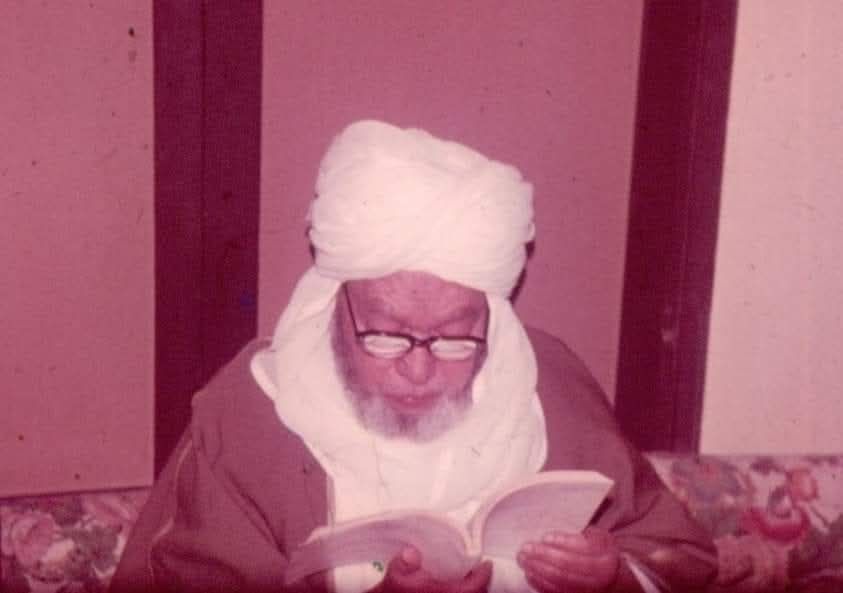
Shaykh Muhammad al-Hafiz al-Tijani (d. 1978 CE) said in his work Fasl al-Maqal concerning the matters that sever one’s connection to Sayyiduna al-Shaykh Ahmad al-Tijani (God be pleased with him):
Said our master Muḥyī al-Dīn Ibn ʿArabī—may God sanctify his secret—in al-Futūḥāt al-Makkiyya, in the one hundred and eighty-first chapter, concerning the knowledge of the station of reverence toward the masters:
Know, that as the existence of the world cannot stand between two “Be!” commands, nor the one subject to obligation between two Messengers bearing contrary laws, nor a woman between two husbands, so likewise may the disciple not stand between two masters when he is a disciple under spiritual training. But if his companionship be not one of discipline, then he need not heed the company of the masters, for he is not under their governance; and this is called companionship of blessing.
The same doctrine was mentioned by the verifying scholar Ibn Ḥajar [al-Haytami] in the conclusion of his Fatāwā, and by Shaykh al-Shaʿrānī, our master ʿAbd al-ʿAzīz al-Dabbāgh, al-Sharīshī, Imām al-Fāsī, Shaykh al-Zarrūq, and others. And concerning the forbiddance of the disciple’s visiting other saints during his spiritual training, it was affirmed by our master Muḥammad al-Kuntī in Jannat al-Murīd, and by our master ʿAlī al-Khawwāṣ and our master ʿAbd al-Wahhāb al-Shaʿrānī in al-Mawāthīq wa’l-ʿUhūd, who transmitted it from certain pillars of the Junaydī path; and something akin to it is found in al-Bahja al-Saniyya regarding the manners of the Naqshbandiyya. And Shaykh Ibn ʿAjība al-Shādhilī, the commentator on al-Ḥikam, mentioned it in his commentary on al-Mabāḥith al-Aṣliyya, as did our master Muḥammad Wafā.
Shaykh Abū al-Barakāt al-Dardīr said in al-Kharīda al-Bahiyya, after mentioning some of the courtesies of the folk, these words:
Among them is that he should not visit any of the righteous while he remains under spiritual training before attaining perfection, lest he see a marvel or a noble trait in one of them that he has not seen in his own master, and so imagine a deficiency in his master, whereby he would be deprived of his master’s spiritual aid.
And al-Ṣāwī, in his marginal commentary upon that passage, said:
His saying, “that he not visit any of the righteous,” means whether living or dead, save by the master’s permission. Yet with this restraint, one must not think that the visitation of the saints or others is unlawful; rather it is but a matter of heeding the indication of the physician.
This was further elucidated by Shaykh al-Munīr al-Samanūdī in Tuḥfat al-Sālikīn, in which he expanded upon it and cited the sayings of the great knowers of God. He was the brother of Shaykh al-Dardīr, and both were disciples of Shaykh al-Ḥifnī.

 Tijaniyat
Leave a comment