
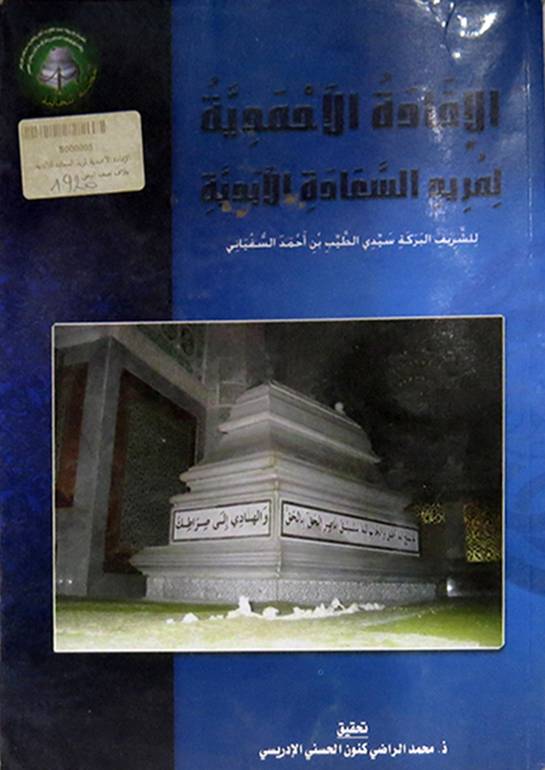
Sidi al-Tayyib b. Ahmad al-Sufyani (Allah have mercy upon him) recorded in al-Ifada al-Ahmadiyya that Shaykh Ahmad al-Tijani (Allah be pleased with him) said:
“Sitting with those who harbor rancor brings a poison that slowly spreads into its companion.”
Sidi al-Tayyib b. Ahmad al-Sufyani commented:
And from the meaning of this is the saying:
Choose for your soul the companion you obey,
For natures steal the qualities of other natures
Sidi Muhammad b. al-Mashri (Allah have mercy upon him) spoke about this danger in his book The Compendium of Dispersed Jewels of Gnosis from the Outpouring of the Oceans of the Hidden Pole:
Among the emphatic conditions required of the spiritual aspirant is that he distances himself from those who oppose the Shaykh, for our master has frequently warned his disciples from mixing with the rancorous and loving them, eating their food, or sitting with them. He would say to them, “Their rancor brings a poison that slowly spreads into the one who sits with them.” Indeed we have witnessed this firsthand with some disciples [who kept close company with haters], and it was only a matter of time before they began to harbor hatred toward their teacher. We ask Allah for safety and protection from contravening the command of the exemplar [the Shaykh] outwardly or inwardly, amen…
Sidi Muhammad al-Mashri (Allah have mercy upon him) also said in The Garden of the Annihilated Lover:
We have witnessed this among some individuals who used to express their love for the Shaykh yet would sit in the company of those who harbored hatred toward him. It was only a matter of time before that very same person would also come to harbor the utmost hatred for the Shaykh. Were it not [the shame] of exposure I would have disclosed their names to you. It was widely known among the sagacious disciples of our master [Shaykh Ahmad al-Tijani] that one who keeps company with the rancorous people suffers ruin and misfortune, either in his beliefs (as we’ve mentioned), or in himself, or in his wealth. Indeed, we know that the Shaykh does not utter except what is true.

 Tijaniyat
Leave a comment